Join Our Campaign to Support Displaced Palestinian Refugees
*Click on the image below for more details.
Working with our partners we can do 2 practical things to help them cope.
Aid kindergarten education so that the most vulnerable of these victims can learn.
Support food sovereignty & local agriculture so that people have nutritious food & much-needed family income.
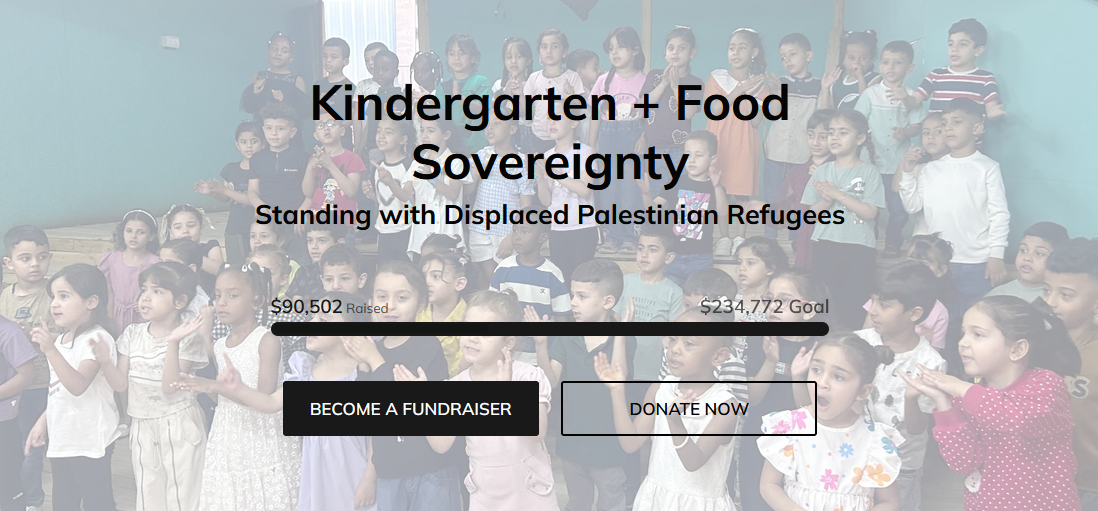
Download Our Program Brochure. Click on the image.
We are a 501(c)3 nonprofit organization that serves Palestinian refugees in the West Bank. We work in health, education & food. We also share knowledge & innovation with other Southwest Asian & North African (SWANA) communities.
Using Rooftops to Expand Food Sovereignty: Pilot Rooftop Garden Project
Working with international & local partners from 2025-2026 we expanded the ways camp-based residents can build food sovereignty. The project should strengthen community, support healthy lifestyles & decrease the need for Israeli-based products in the future. Our goal is to integrate efforts like this 1 across our education-food-health programs.
We have a lot of people to thank for making this possible.
Volunteers & especially young people in the UN-run Aida & Azza camps.
Families who host & care for the gardens.
Financial supporters who believed in the project.
Members of Design Palestine who built a global team to design, test & install the technology.
Our local partner the Lajee Center.
By October 2026, 35 families with over 175 people in total were benefiting from the project in 2 UN-run refugee camps. As this was a pilot project, we will continue to monitor its progress, make adjustments & roll it out in other camp-based locations as desired by local communities.
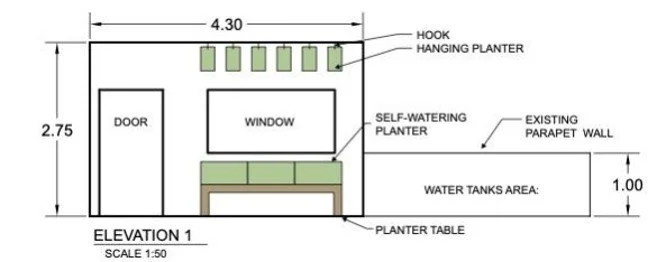
Architects' drawing of rooftop garden plot.
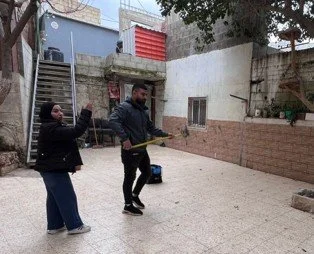
Local team conducting a rooftop site visit.
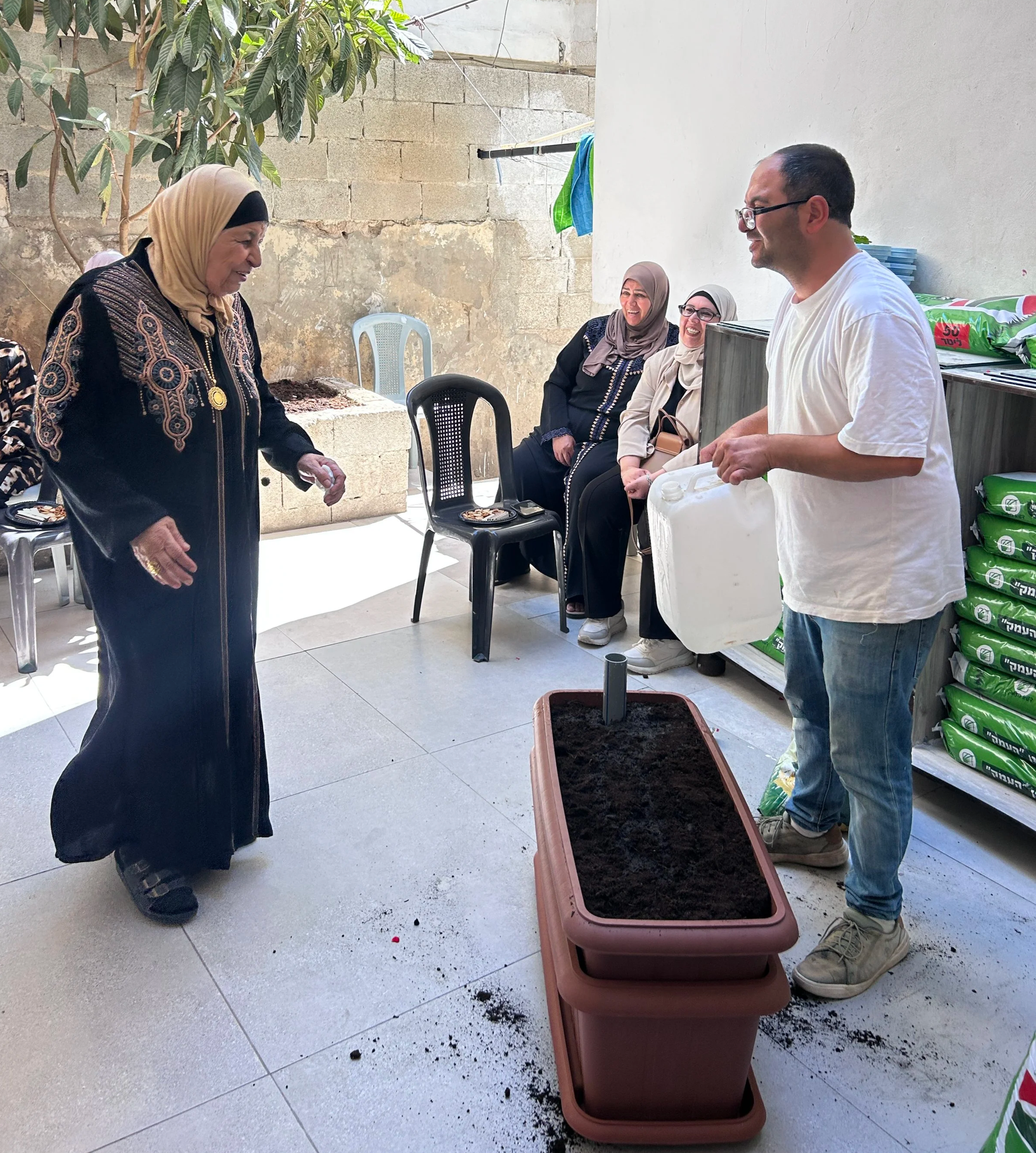
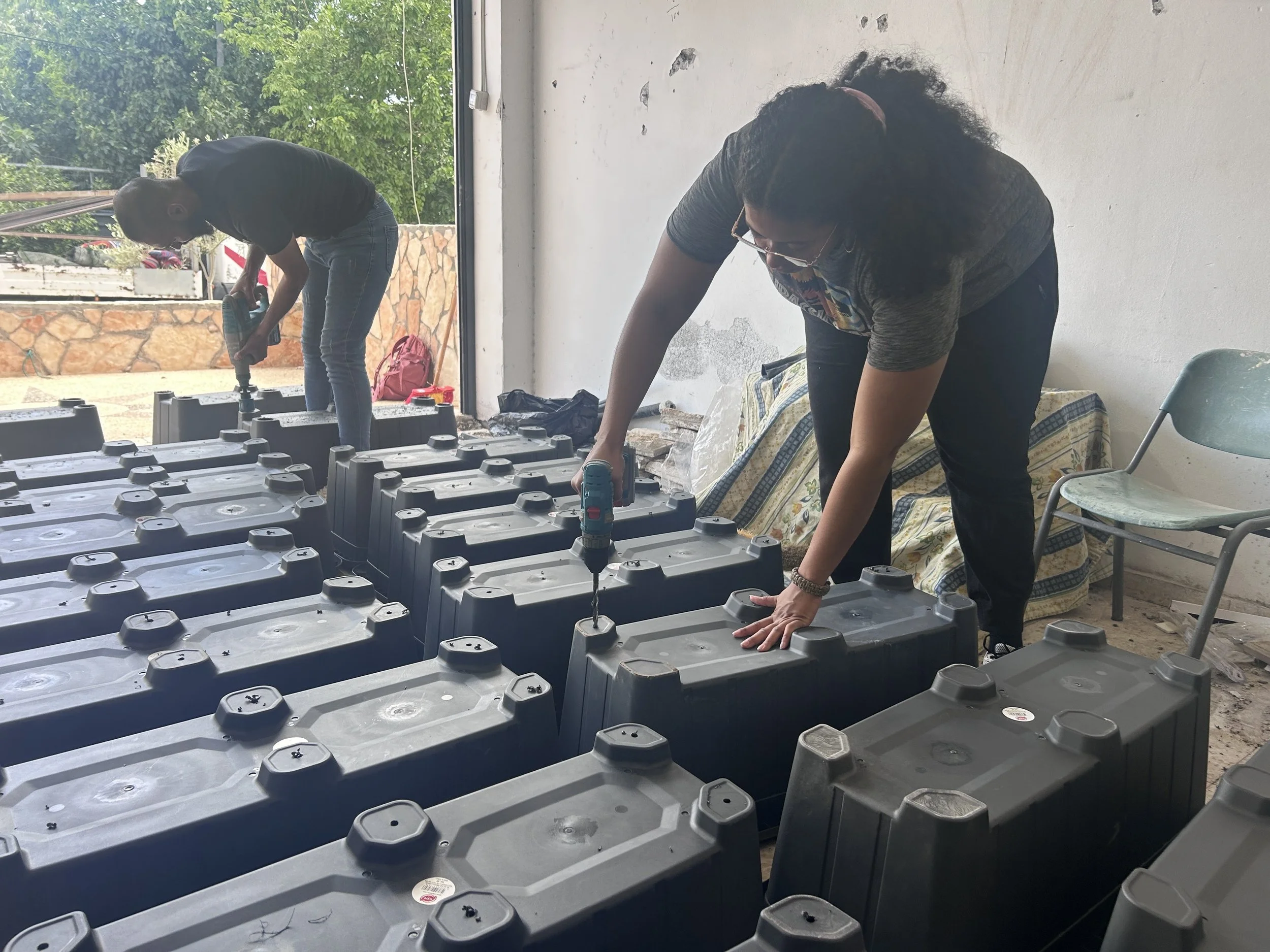
Planters for the rooftop gardens being distributed to 35 families by the food program director.
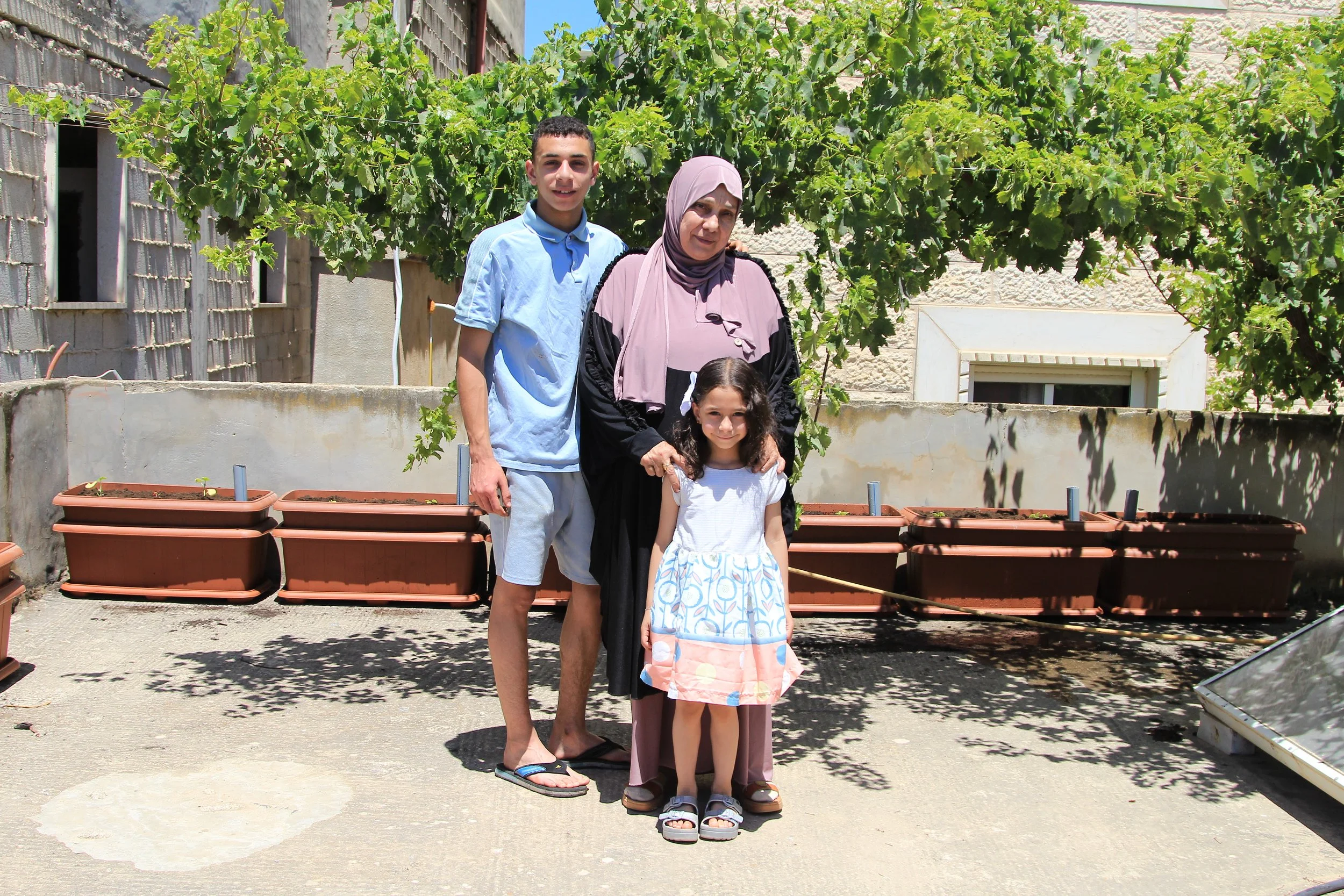
A family in the UN-run Aida camp hosting a garden with part of it behind them.
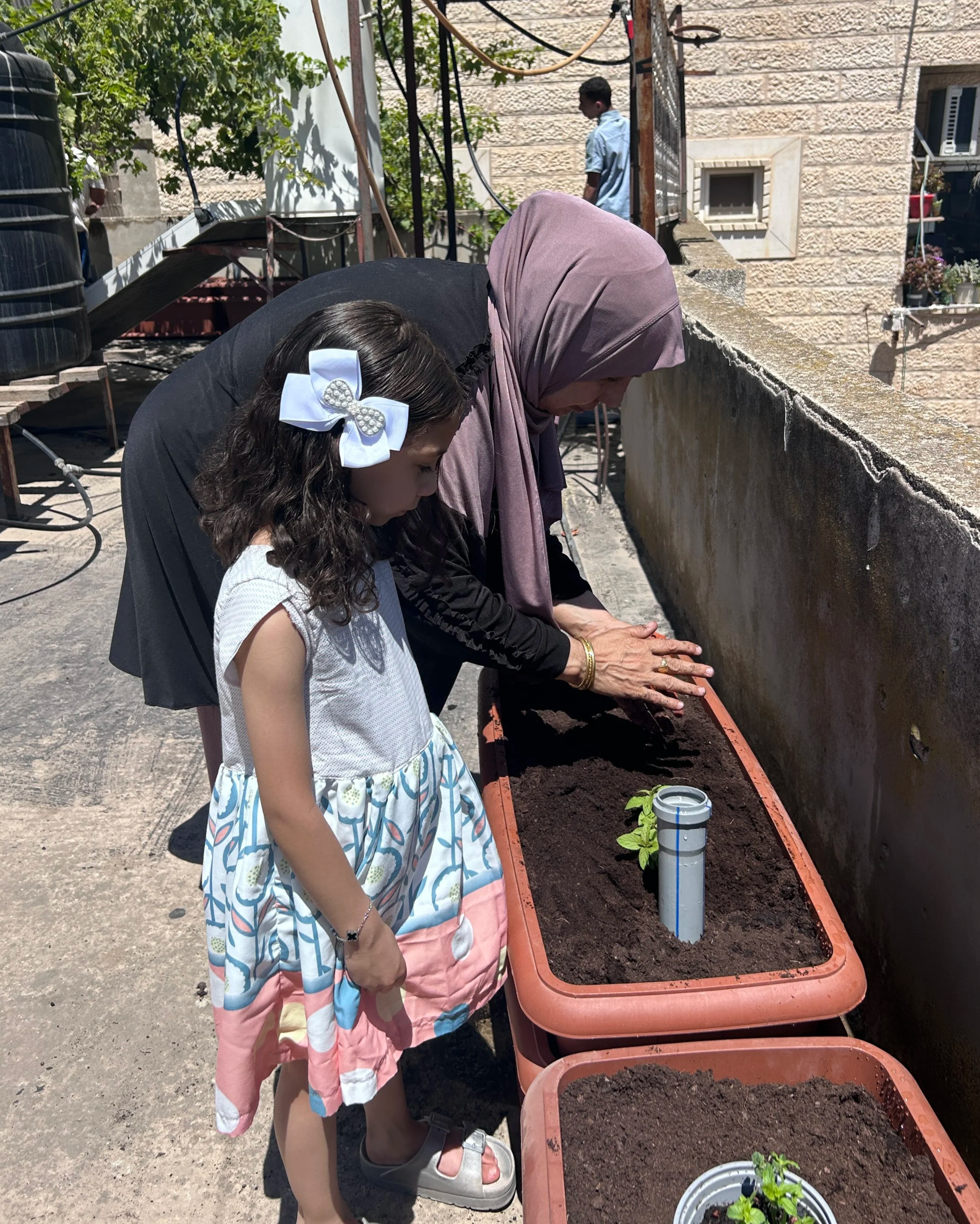
A family member planting seedlings in the new rooftop garden. This was a test plot.
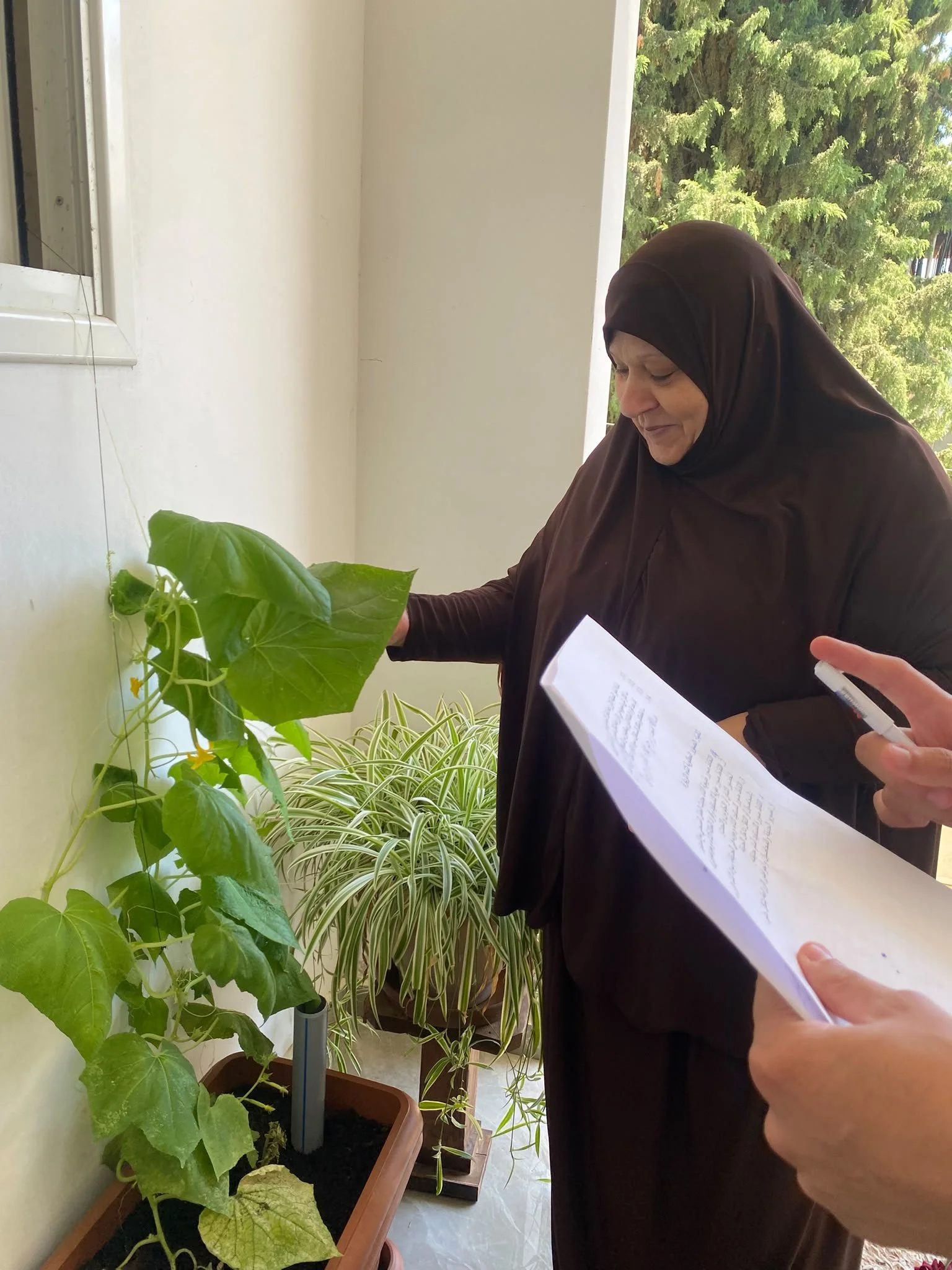
Food program team members checking on a rooftop garden.
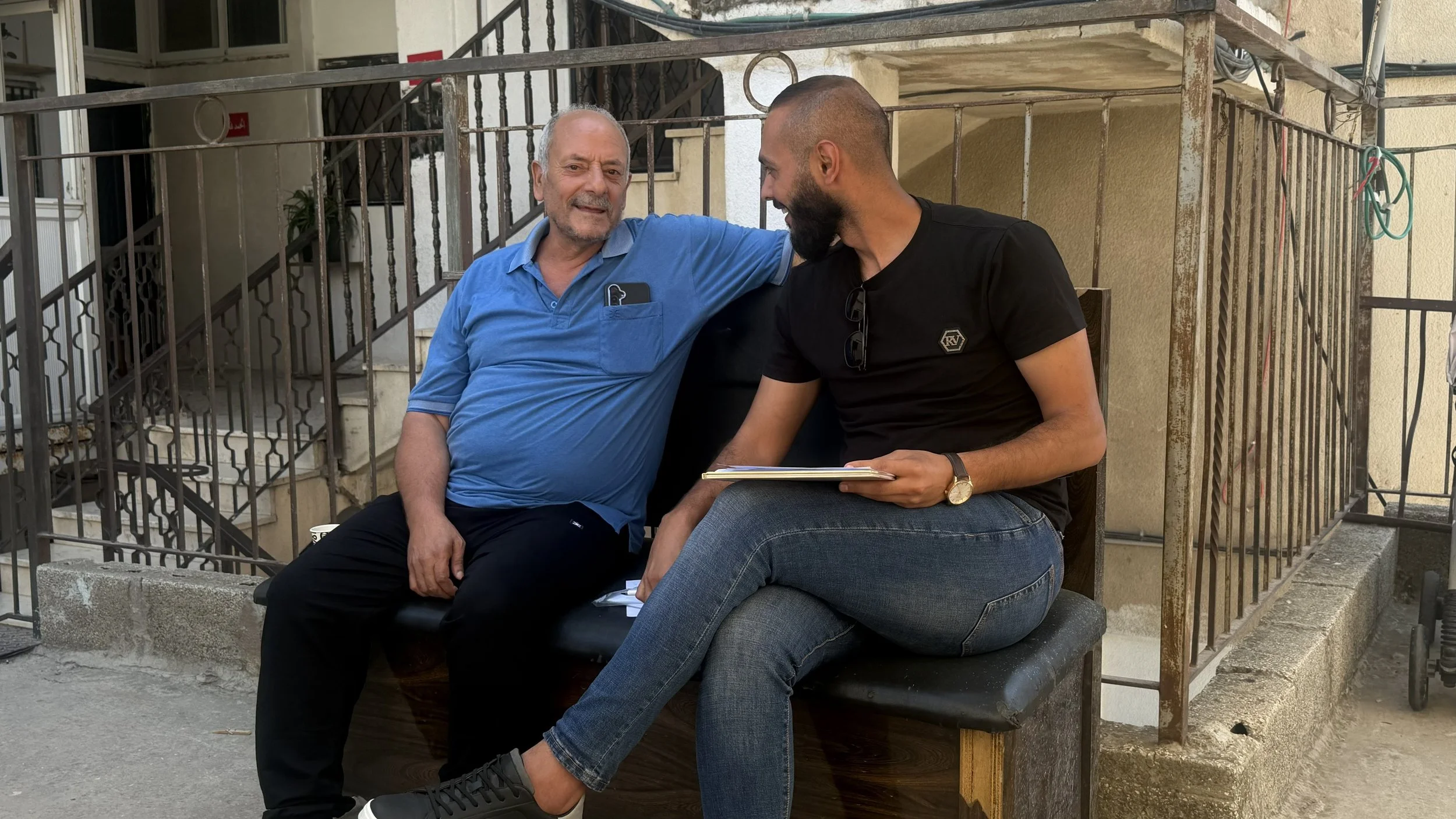
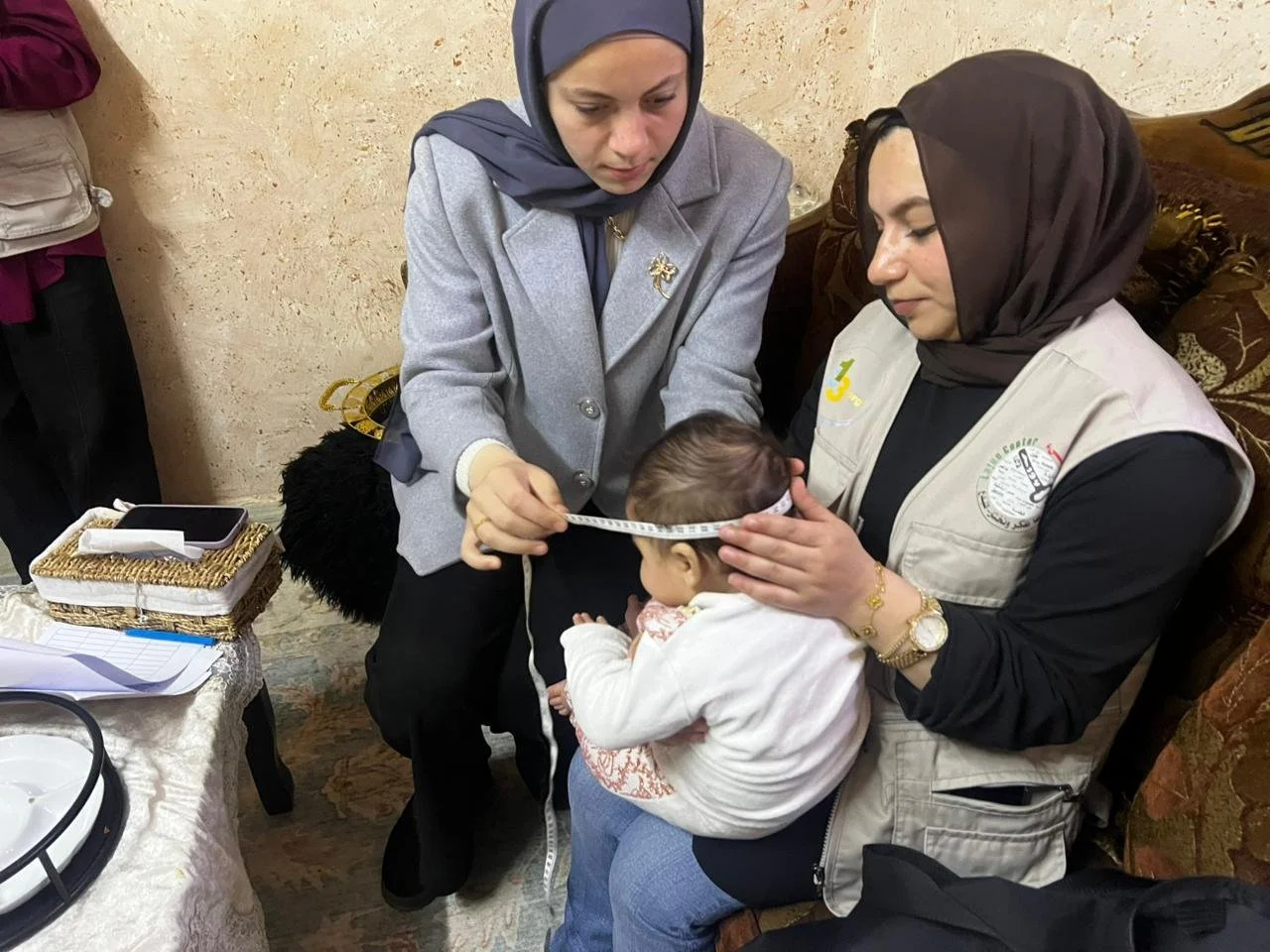
A garden host with a Health 4 Palestine community health worker.
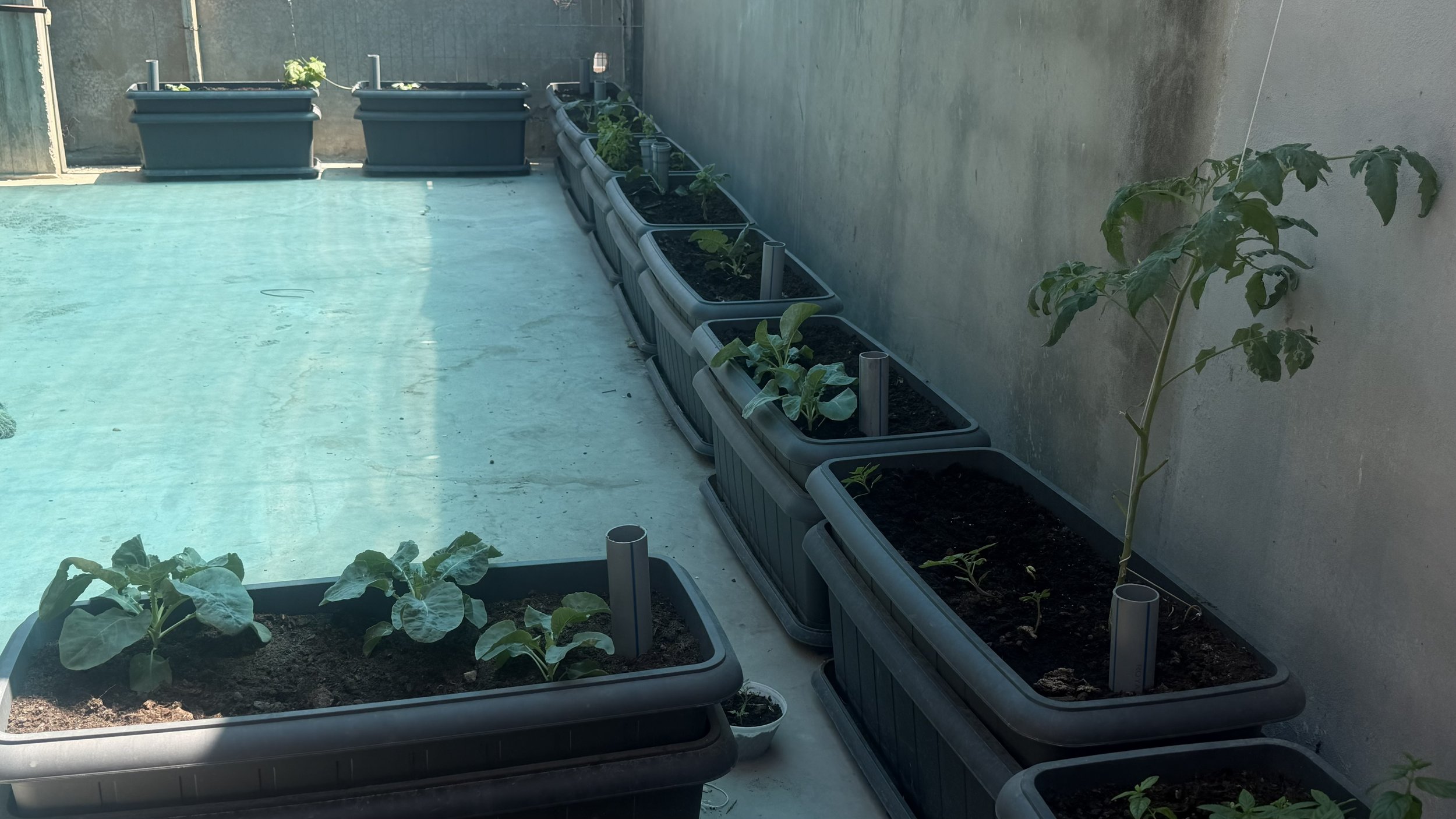
A garden in production.
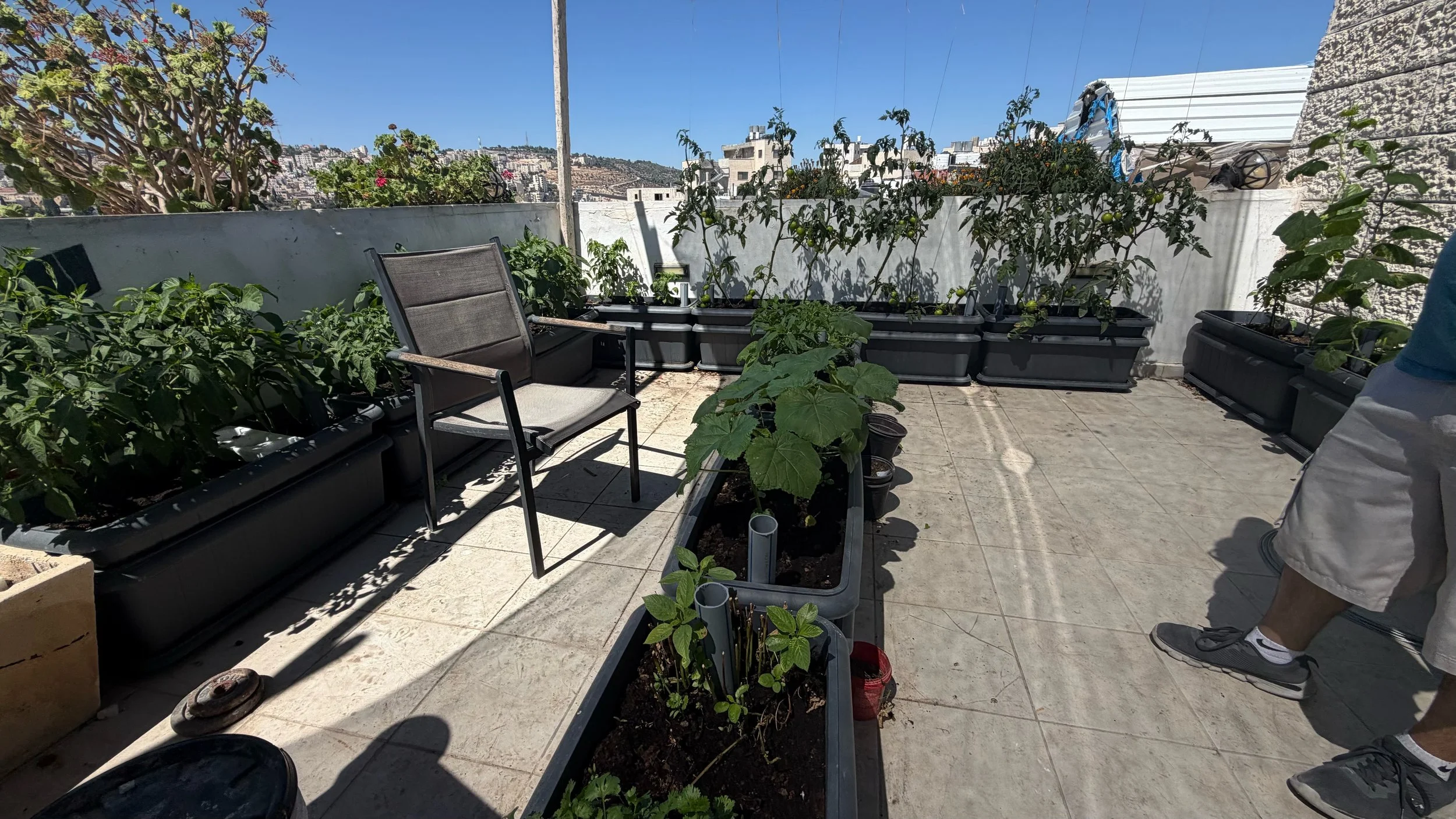
A larger space for a garden on yet another rooftop.
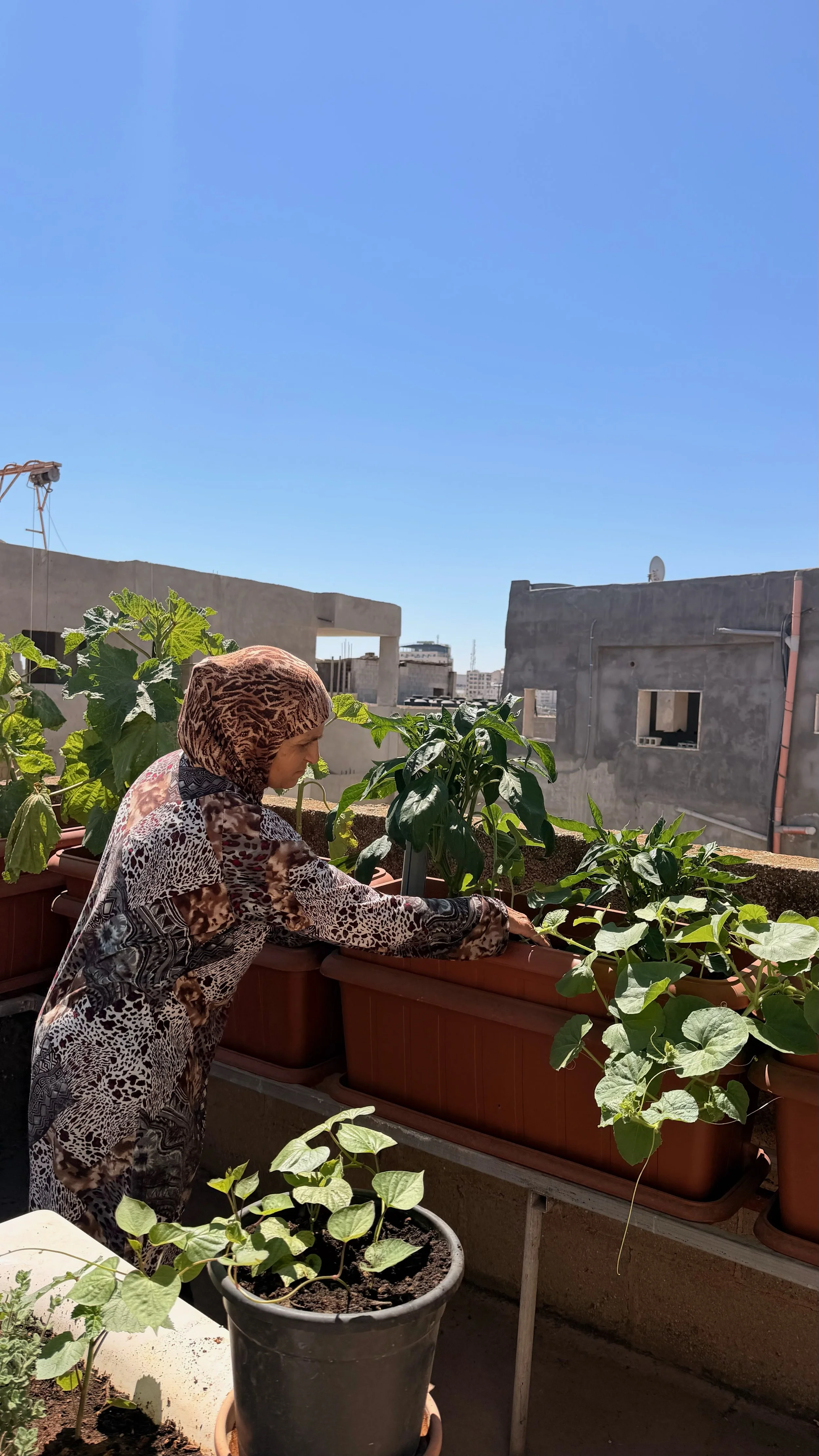
More production. It worked!
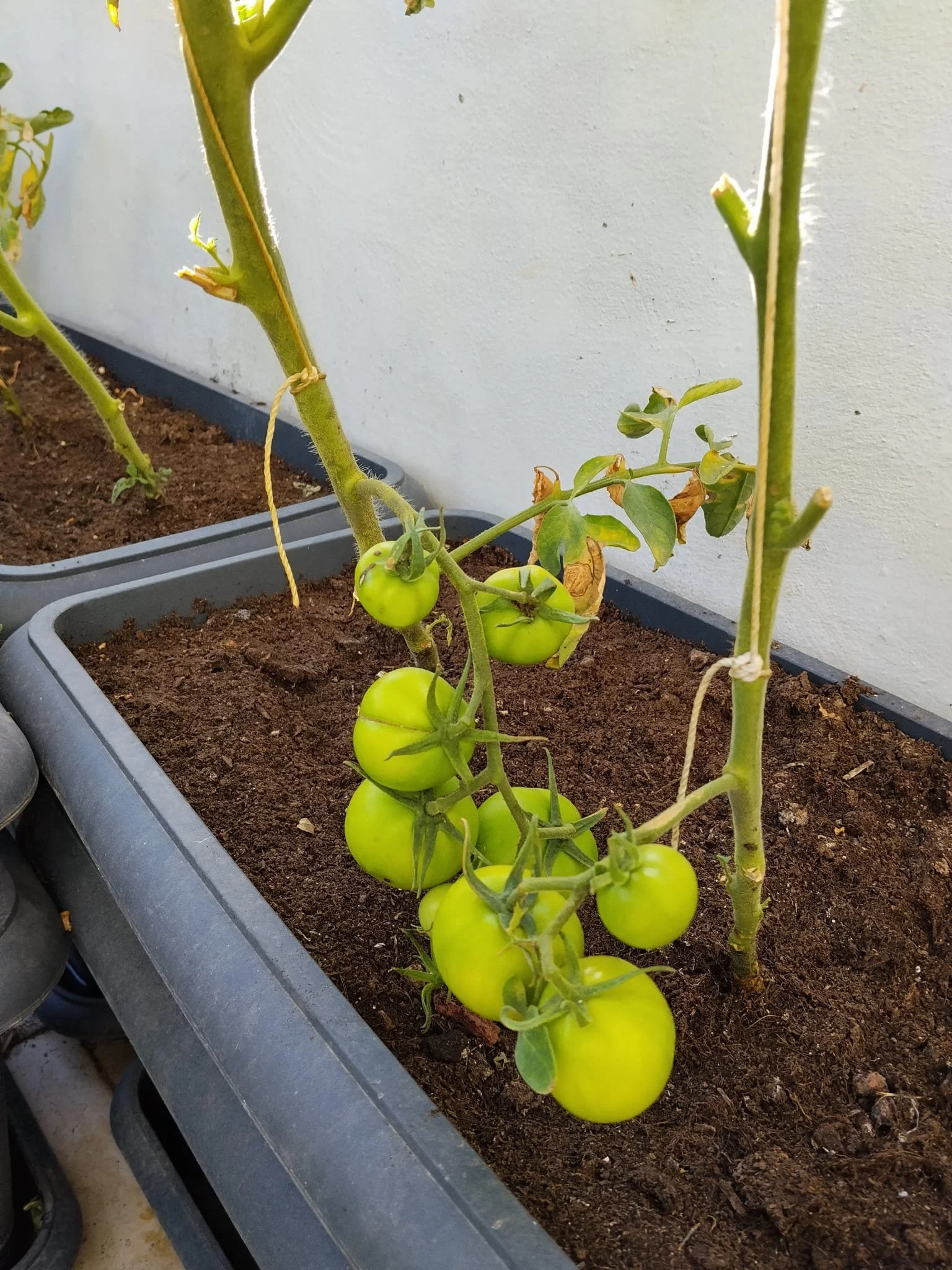
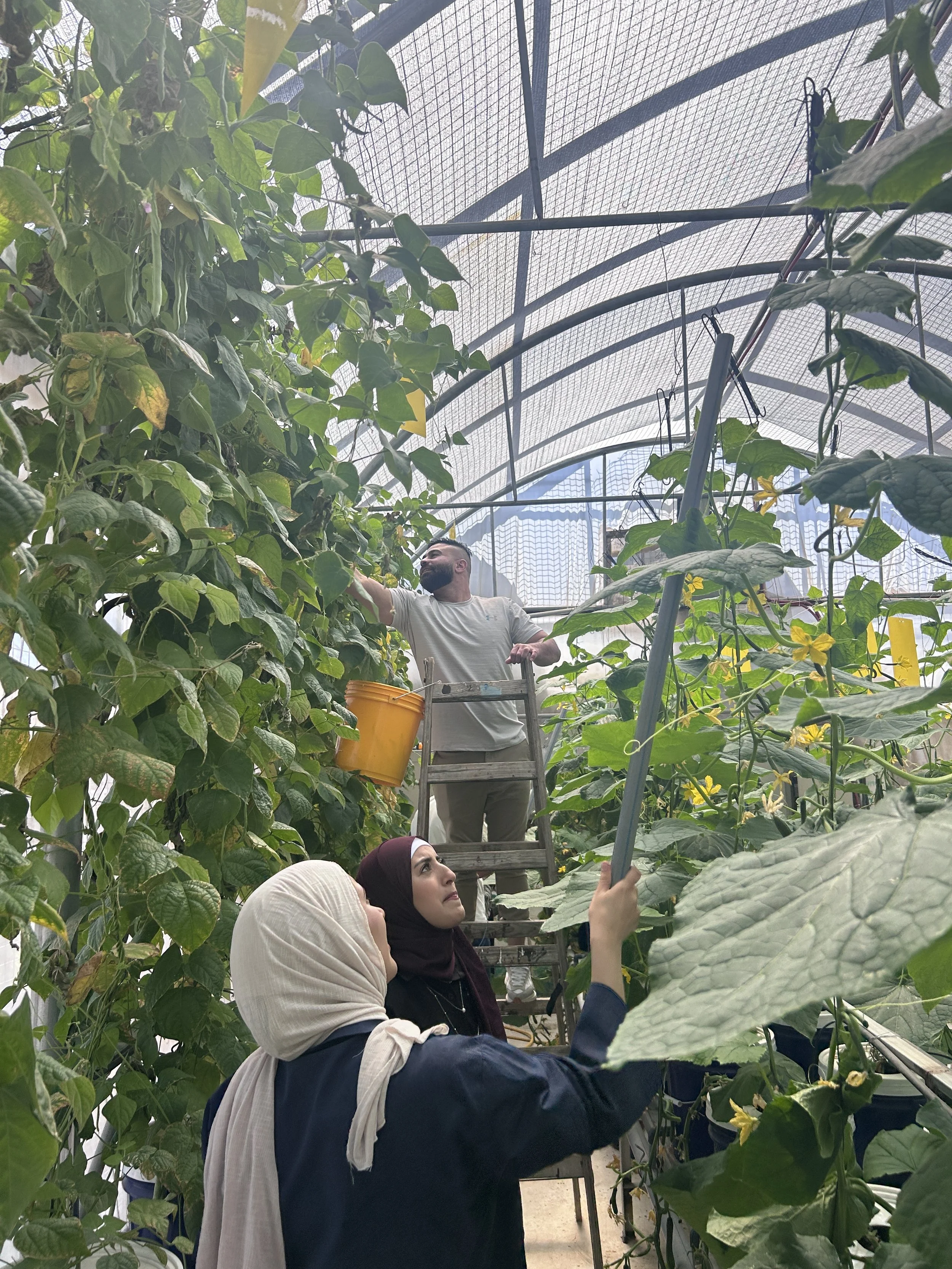
Vegetables being produced in planters.
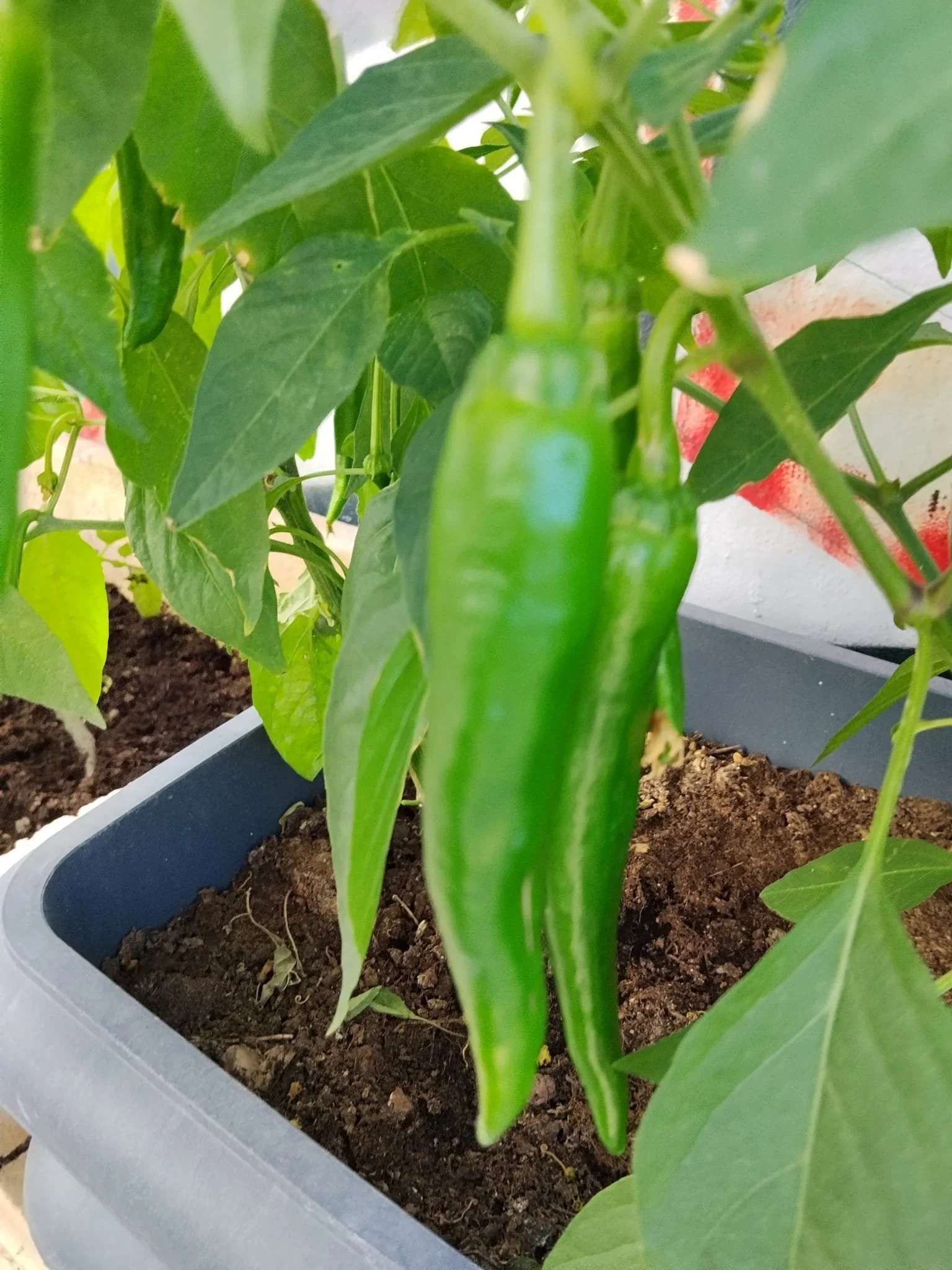
Peppers being grown in planters.
Our Programs
Health
Health 4 Palestine (H4P) is our program that supports community health. In it, 19 trained community health workers (CHWs), 3 psychologists & 3 local doctors, work in 5 camps with over 400 patients. They have conducted over 30,000 home visits. Most care focuses on treating chronic diseases, pediatric wellness & trauma.
Food
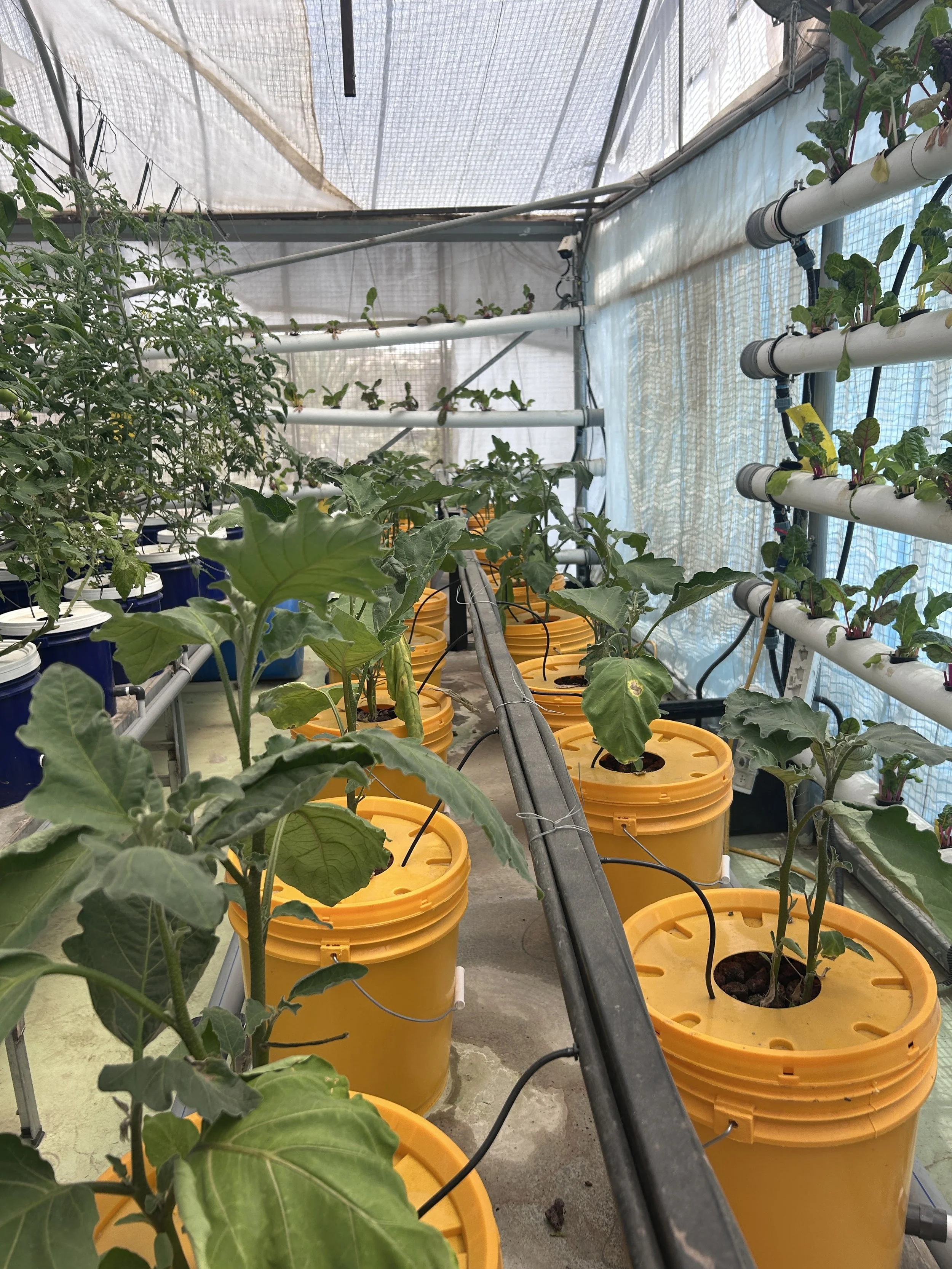
We support the creation of food-growing centers & training programs in 4 camps. Our impact includes 50+ rooftop gardens, 4 community hydroponic rooftop gardens, 50 micro growing towers, 1 seedling garden & 3 greenhouses. 18 farmers & staff, a over 20 young adult volunteers make up the core participants in our food work. Our goal is to advance Palestinian food sovereignty & support healthy lifestyles.
Education
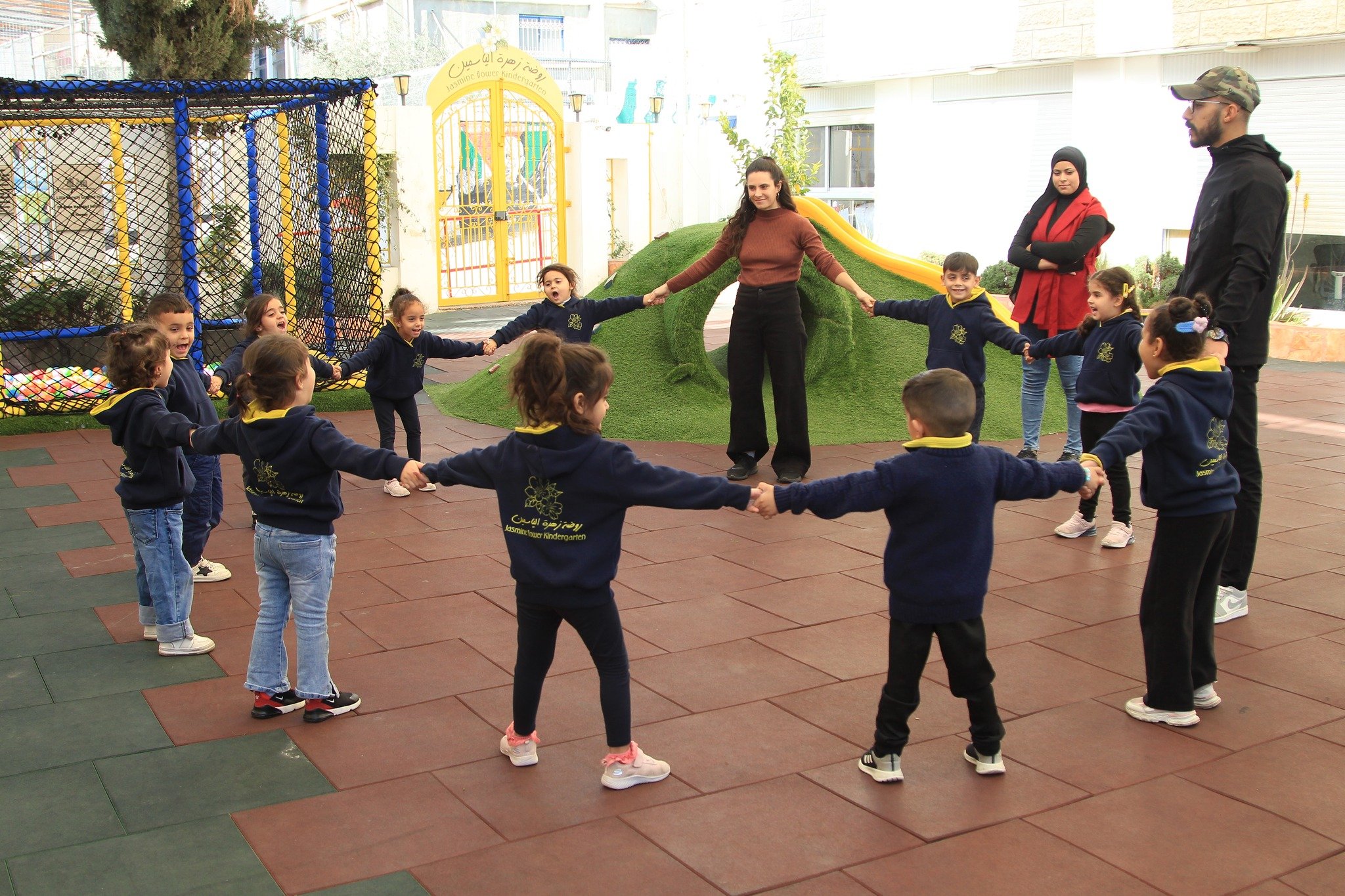
Since 2019, 1for3 has brought together Palestinian & US educators to support child-focused learning in 4 camps. With our partners we started a kindergarten in the UN-run Aida refugee camp that can enroll 75 students & 9 teachers/staff. In Tulkarm camp, we support another kindergarten that serves over 100 children and 13 teachers/staff. Our goal is provide a great early-childhood education to nurture a lifetime of learning.
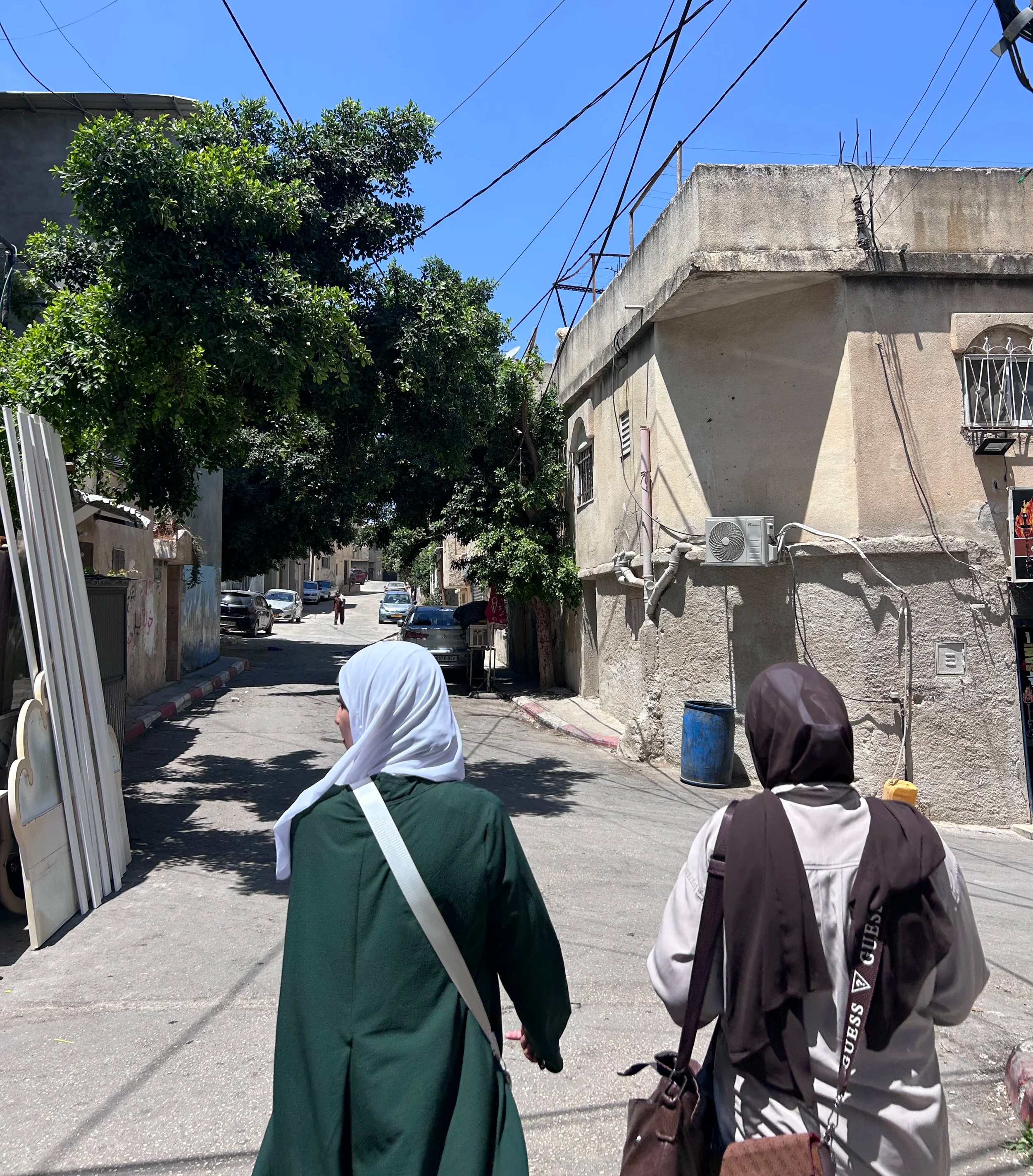
1st Home Visits!
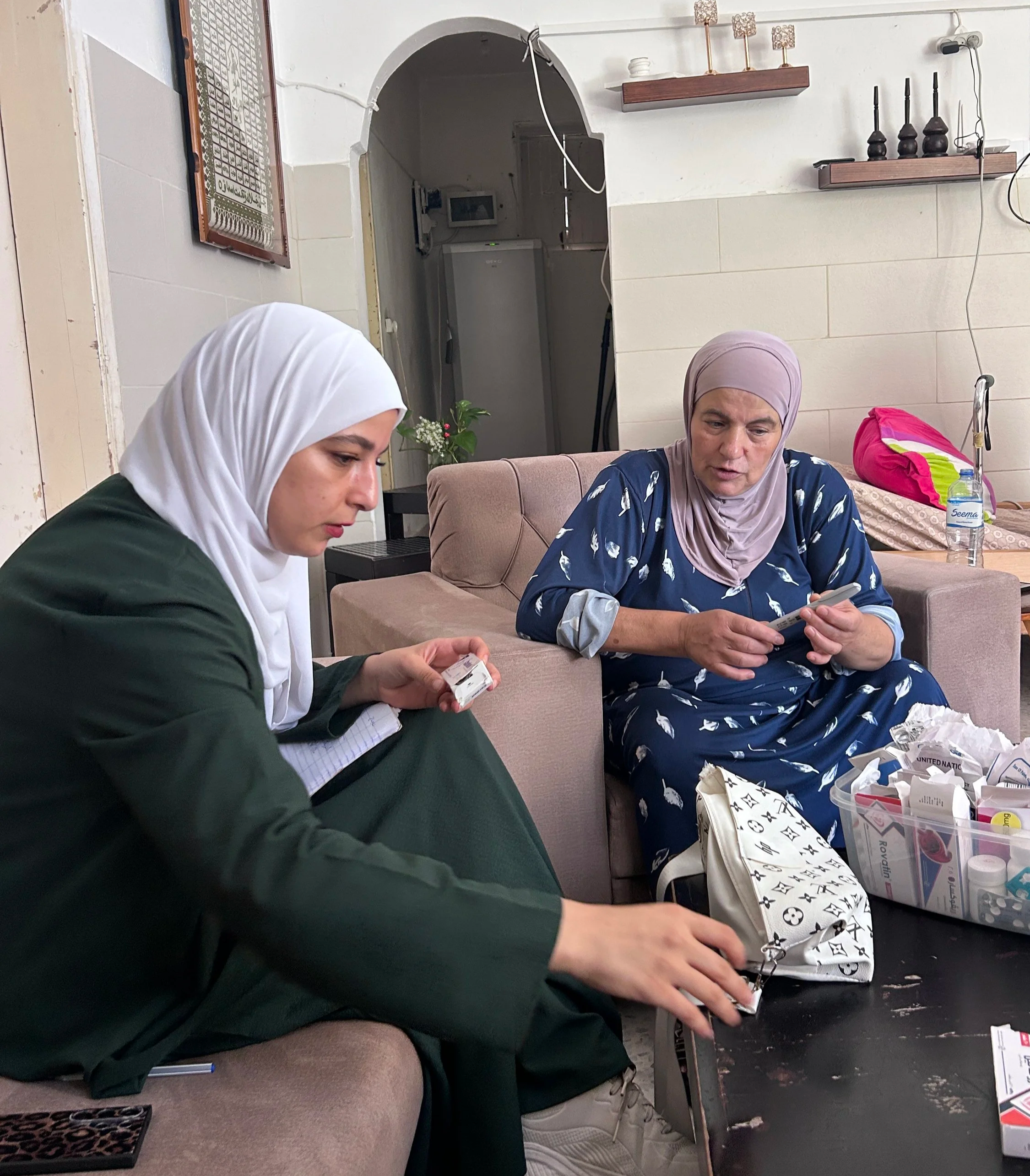
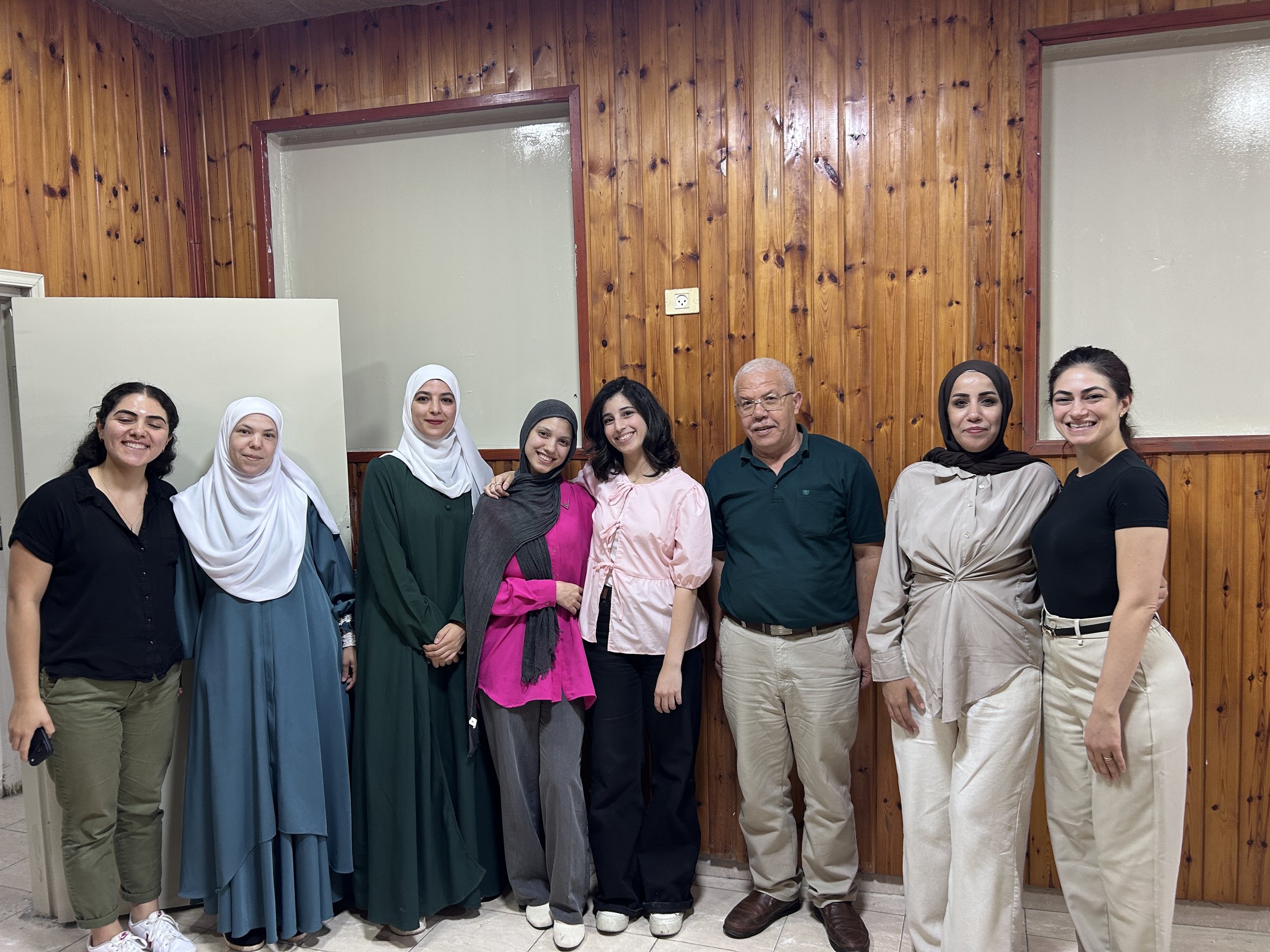
Health 4 Palestine’s newest team of trained community health workers (CHWs) recently conducted their 1st home visits. They have 80 patients in the UN-run Jalazone camp, home to approximately 17K people. 1for3’s team in Palestine caught up with the CHWs on some of their first patient calls.
Growing More Food.
Our food program is expanding opportunities for families to grow their own food & to share with their neighbors. We are working with our local partner, the Lajee Center in the UN-run Aida camp & Boston-based Design Palestine to create 29 new rooftop gardens. These growing areas will repurpose unused rooftop spaces converting them into places of food production. Training & mentoring will help residents achieve good yields & solve problems. This is a pilot program & if successful will be offered to other refugee-camp communities in the West Bank.
Over the past 10 years, 1for3 has supported the creation of food-growing centers & training programs in 3 camps. Our impact includes 45 rooftop gardens, 4 community hydroponic rooftop gardens, 50 micro growing towers, 1 seedling garden & 1 greenhouse. Women & young people make up the core participants in our food work.