Food: Cleaner Water, Fresher Air, Healthier Bodies.
Program: Water
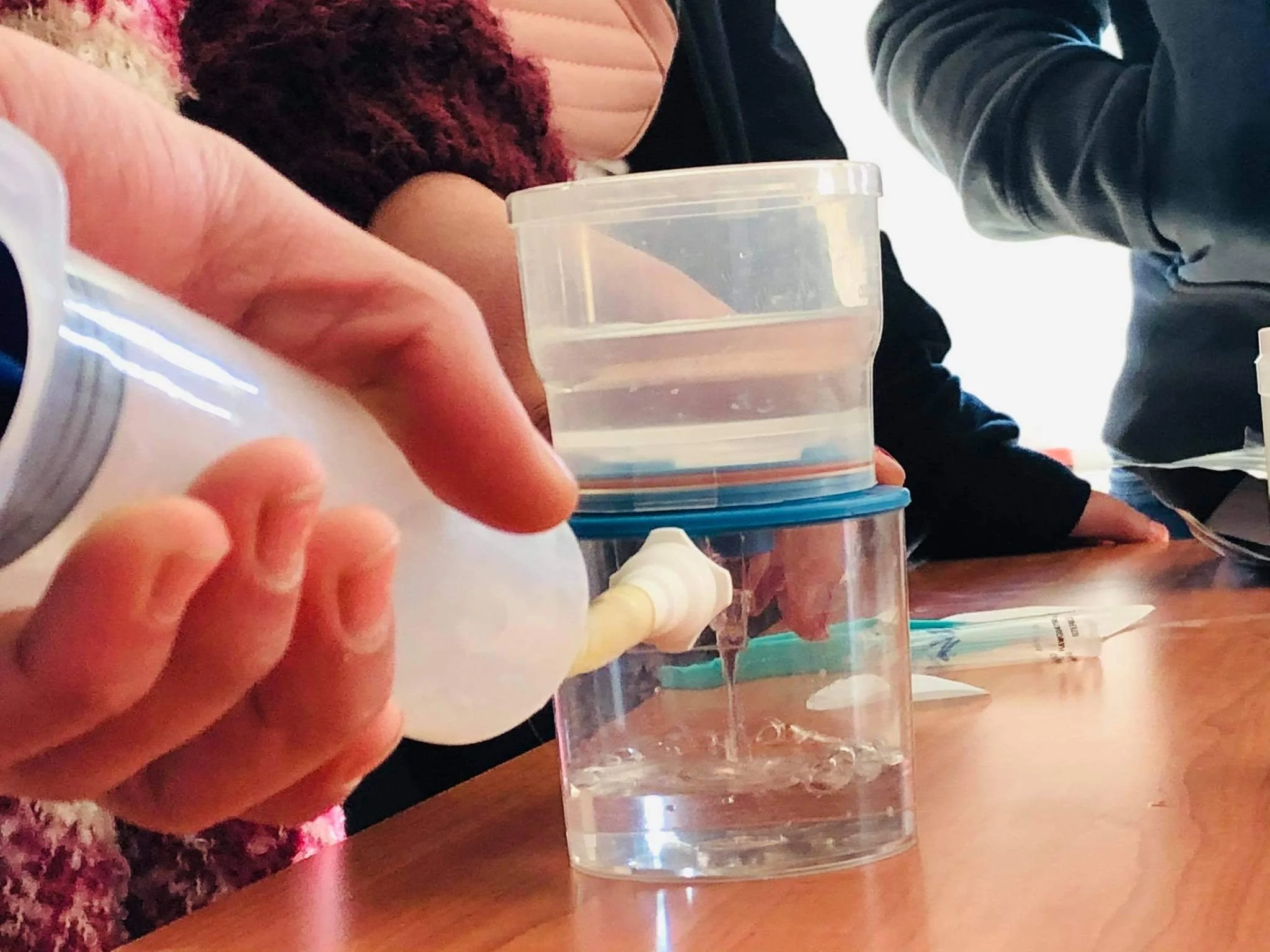
Fighting for better water quality for Palestinian refugees was the reason that 1for3 started. Our first program, in 2012, established a water testing lab in the UN-run Aida refugee camp in partnership with a local community center, Lajee, and Tufts University’s Water: Systems, Science & Society program (WSSS). Water remains at the heart of our work. Since 2012 we have established portable water quality monitoring programs, built two community cisterns, replaced 30 roof-top water tanks to safeguard household water supplies, established 3 community hydroponic gardens & led four delegations to build water testing labs and train technicians to test and monitor water that has led to upgraded infrastructure.
Community Need
The ongoing Israeli occupation interferes with the natural dependency between water, food, health & education in the everyday lives of those living under it. Reliable sources of clean water impact the cultivation of food, which, in turn, affects the health & well being of individuals. When Palestinians are unable to grow their own food because of limited water & lack of arable land their health suffers. When children do not have a right to play & learn the entire family’s well being is at risk. Often, these innovative & sustainable solutions are generated by the community.
Program: Food
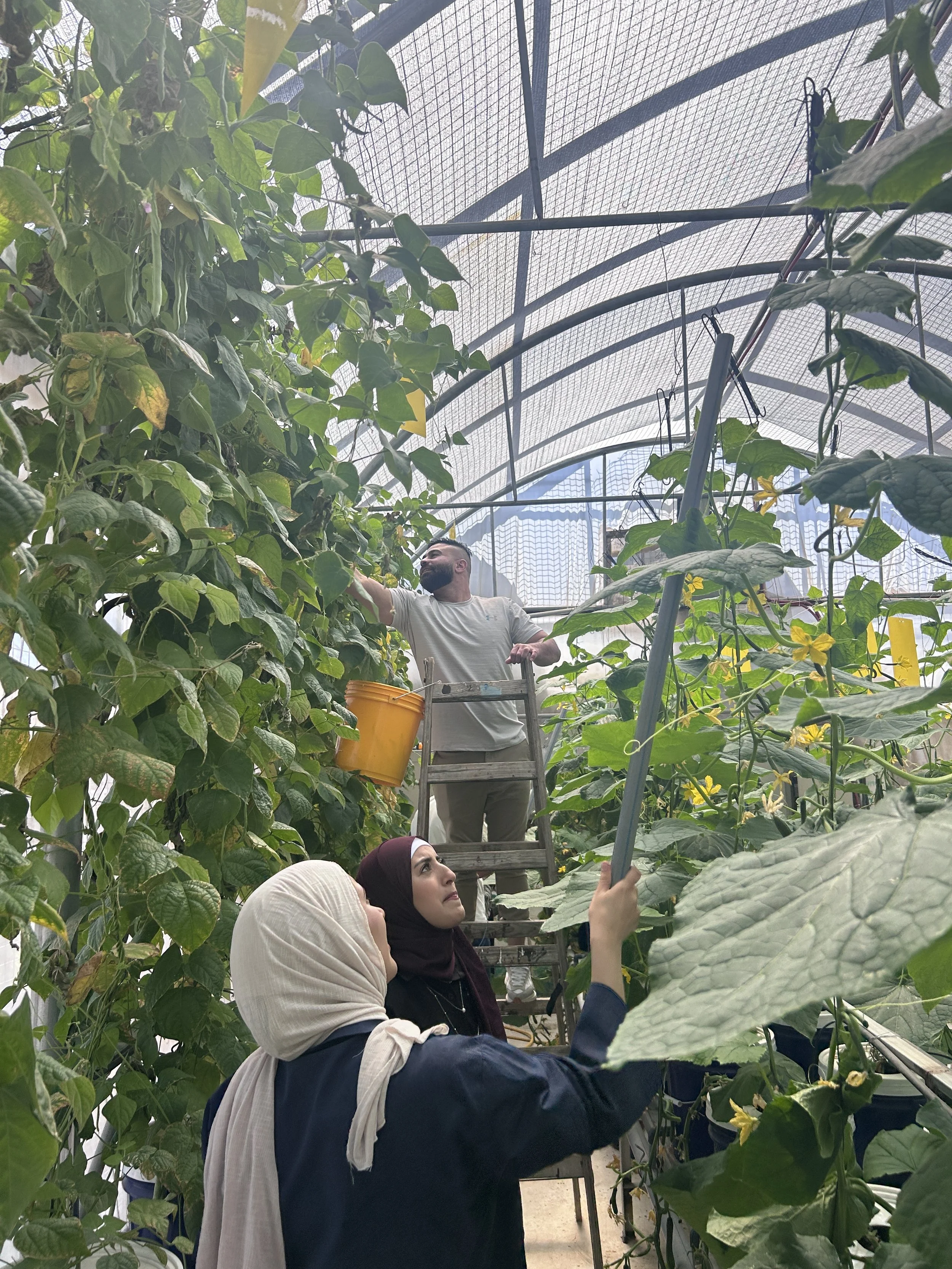
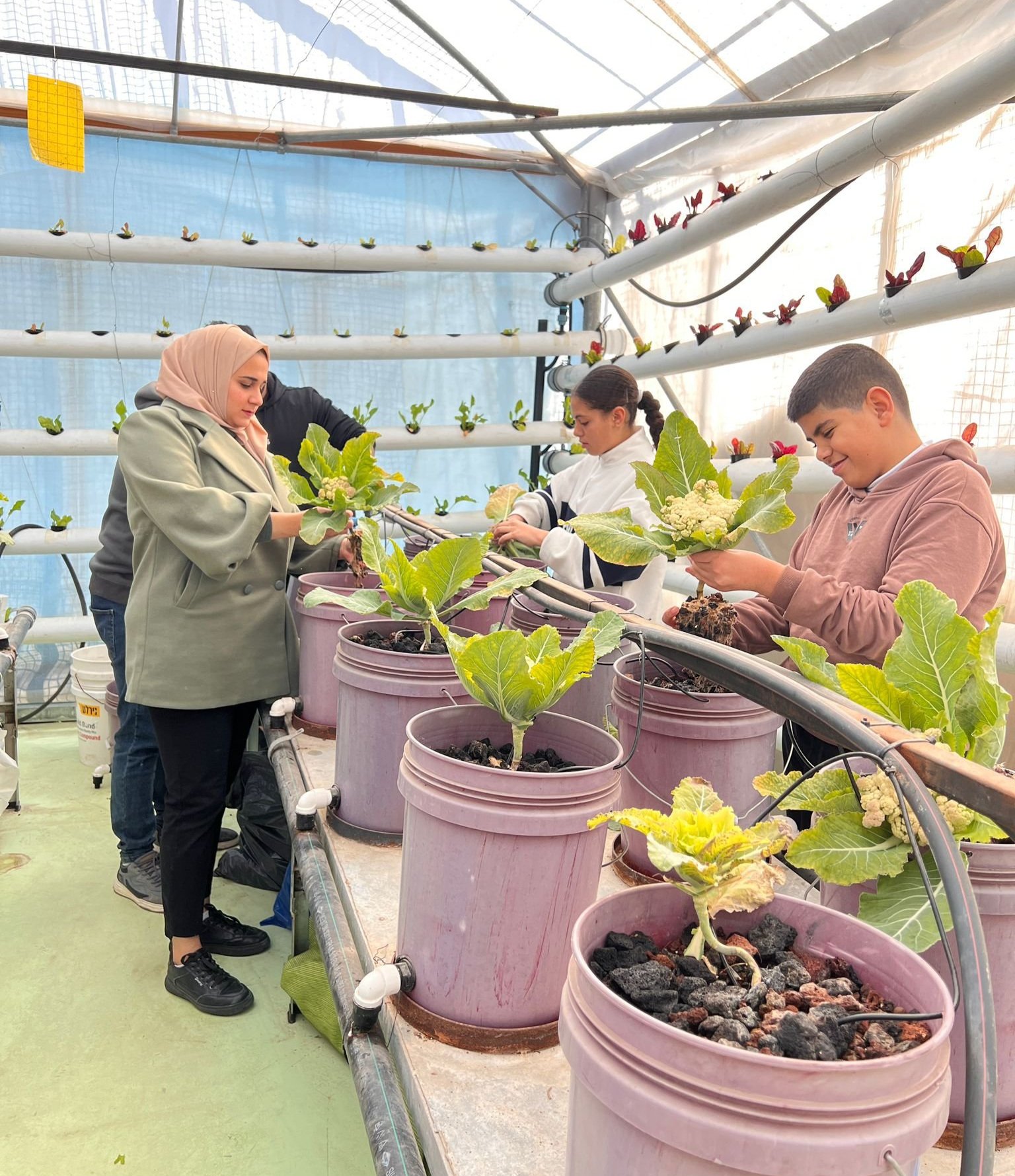
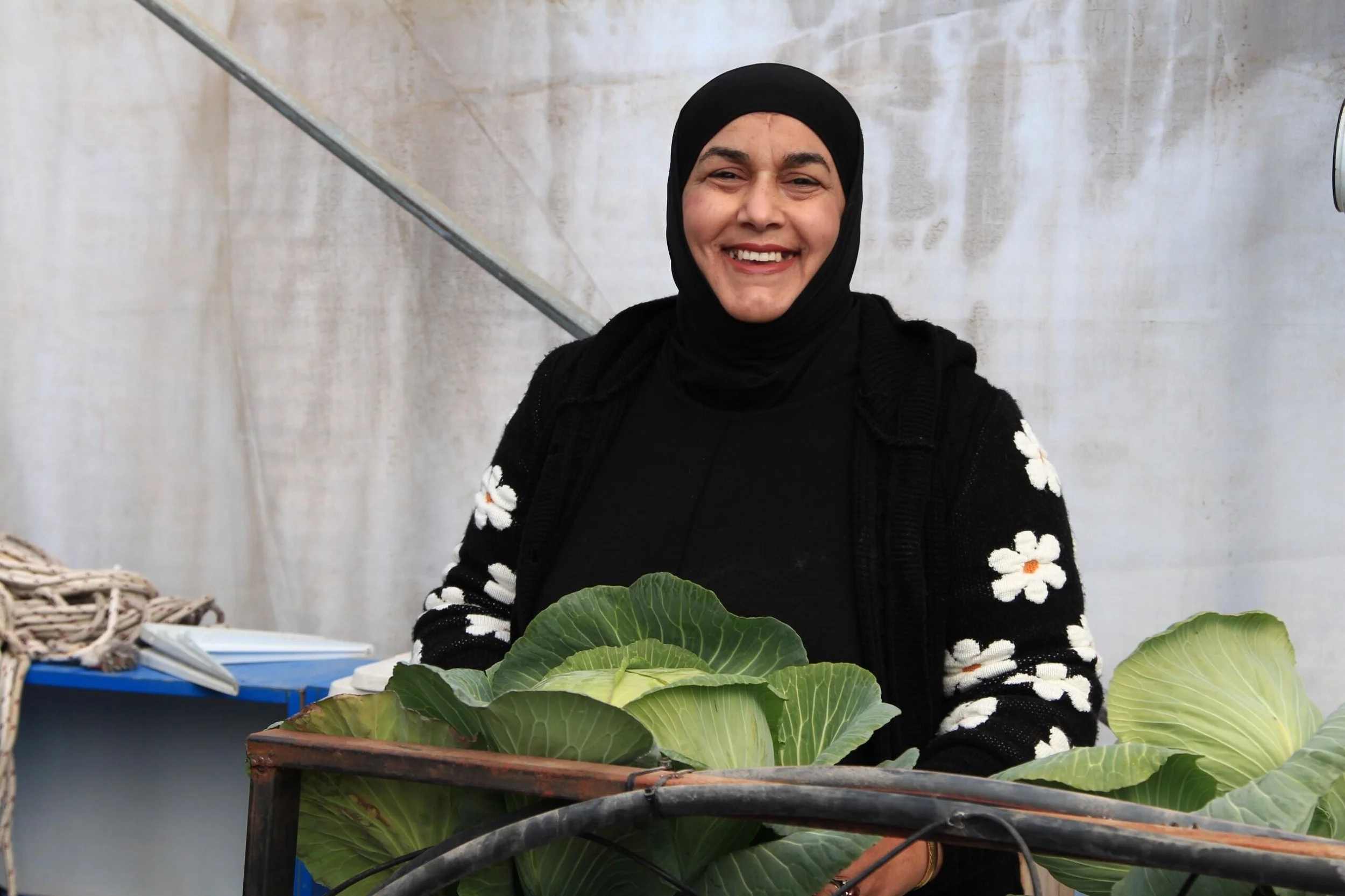
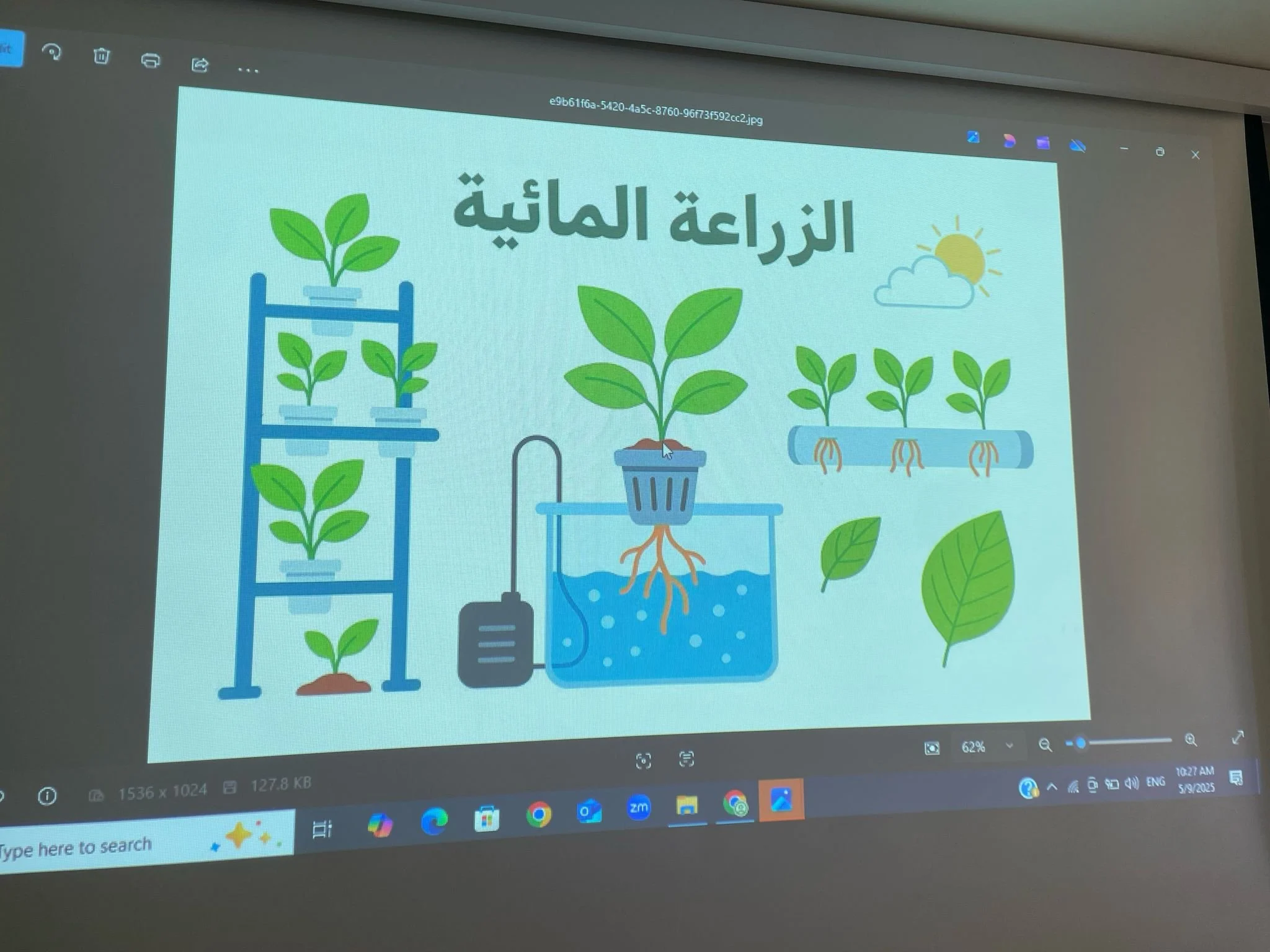
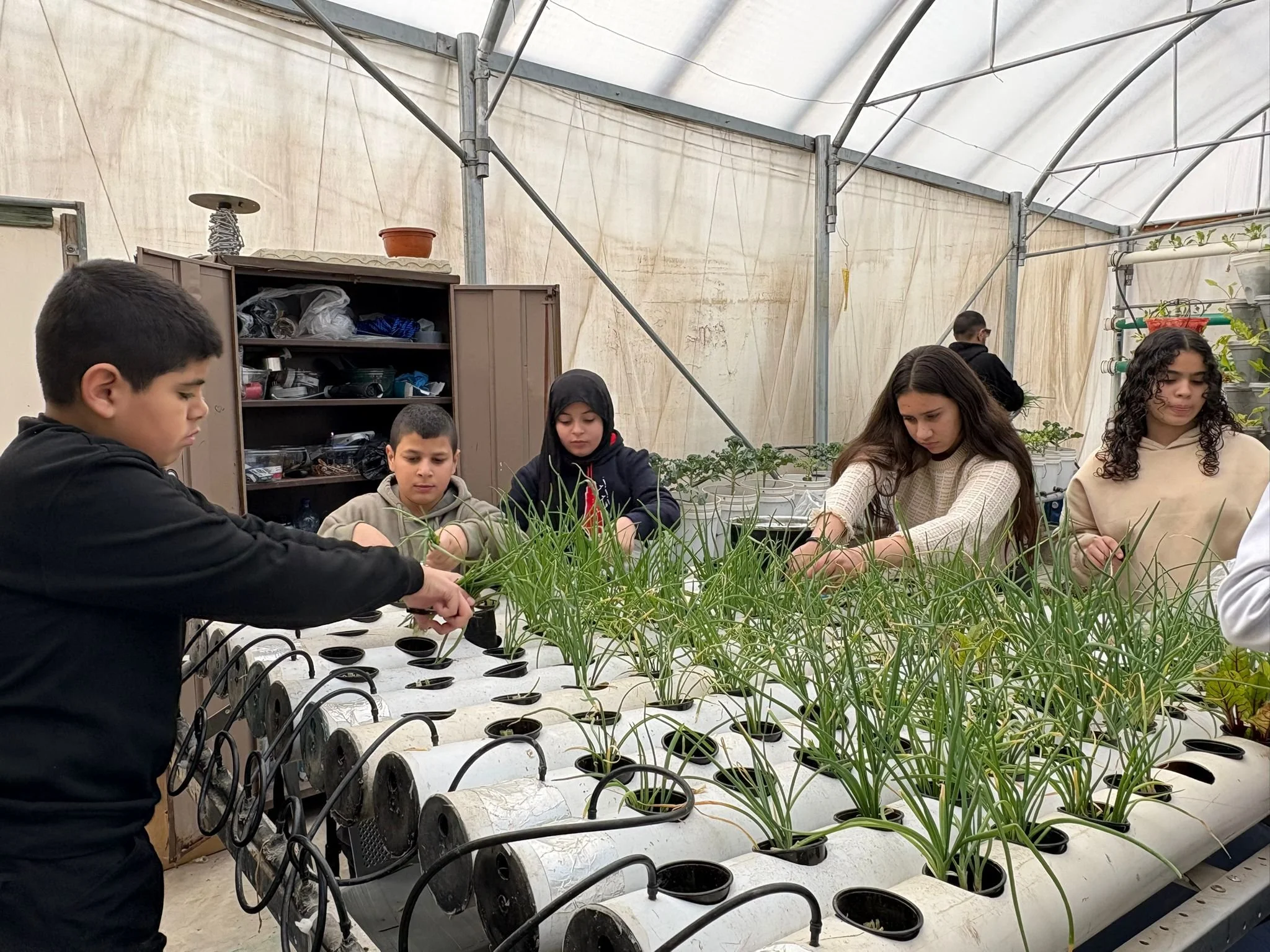
Our work in food encompasses the construction & operation of community hydroponic gardens, micro growing towers, seedling gardens, green rooftops & greenhouses. In addition, we provide training in hydroponics & other growing techniques. Women & young people make up the core participants in our environment work. Our goal is to advance Palestinian well being through food sovereignty, healthier lifestyles, safer drinking water & cleaner air.
We do not engage in food as emergency aid provision.
The food program turns a problem into an asset. The “problem” of refugee camps is that they are dense, urban & lack growing space. We are using these realities as assets for food production, community building & individual health. Through our experience we know that hydroponics work perfectly in these locations & when linked to health programs, contribute to healing & community building.
In 2014, 1for3 and the Lajee Center built the first rooftop garden in the UN-run Azza camp. This project was funded by the WSSS team from Tufts University, 1for3, the Pontifical Mission in Jerusalem & Al-Awda organization.
Over the past 10+ years, we have supported the creation of food-growing centers & training programs in 4 camps.
The reality of food insecurity in the lives of Palestinian refugees is profound. Often the poorest & most marginalized members of Palestinian society in the West Bank, food insecurity for refugees has real-world, life-time long consequences. Among these are poverty: nutritious food in the local market is not affordable; illness: poor quality food increases hypertension & diabetes & shortens lifespans; precarity: most produce comes from Israel meaning that access to it is at the whim of military occupiers. Expanding local food production (i.e. food sovereignty) in refugee camps in an environmentally conscious manner addresses these & other issues.
In addition to tangible physical benefits our environment work supports the psychological health of refugee communities. From our years of experience working in urban growing we know that communally produced food & other outdoor activities provide mental health well-being to individuals & flexibility to society. It does this by expanding resiliency, gender equality, and trauma treatment, among others.